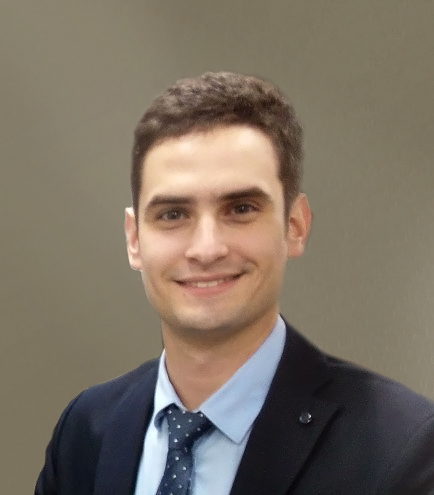
1. What has been your career path after completing the course?
Having finished my degree in Biochemistry at the University of Madeira with "The Best Student of the Degree Award", I applied for a scholarship offered by the Japanese Ministry of Education, Culture, Sports, Science and Technology program – MEXT Scholarship. (I was informed about this scholarship via an email sent by the University of Madeira. The fact that the University of Madeira informs its students about Scholarships abroad is a very positive aspect). While I waited for the results of the scholarship, I applied for a Masters in Nanochemistry and Nanomaterials at the University of Madeira and completed the first semester.
As one of the three students in the whole of Portugal to be selected for the prestigious and highly selective MEXT "Scholarship" I came to Japan in April 2015 at 21 years of age. Out of the three students selected, I was the only one who came to the University of Tokyo (the most prestigious one in Japan). I arrived at the University of Tokyo as a Research Student. In order to become a Master Student I was required to pass a written exam and an interview, both extremely selective in nature due to the high number of students who apply.I became a Master Student in September 2015. I studied chemistry at Professor Takuzo Aida's laboratory (world leader in Chemistry of Polymers and Materials Science) in the Chemistry and Biotechnology department at the School of Engineering. I was given the liberty to choose a topic in the area of porous materials which was a great challenge for me bearing in mind my experience. Nonetheless, I was able to suggest a topic which was accepted with admiration by my colleagues and professors. I combined the knowledge I acquired during my degree in Biochemistry and the new area in which I worked – Metal-Organic Frameworks. I finished my postgraduate degree (Masters) on 15th September 2017 and I intend to apply for a doctorate in the field of immunotherapy, with the aim of fighting against and further understanding cancer.
2. Which aspects of your academic training were relevant to your profession?
Success in all areas of life depends on, in my view, two aspects: internal and external to the individual.
1) (Internal) - A person's determination/motivation to pursue their dreams/objectives no matter how difficult the chosen path may be.
2) (External to the individual) - The quality of our foundations. The base on which we are raised has an enormous influence on who we become and it is about this second point that I wish to talk about. The quality of the foundations conveyed to students at the University of Madeira are, in my opinion, of the very best. Not only the quality of the foundations but also the way in which they are passed on, enables students in three years, to become extremely skilled in their area, providing them with important tools to open up new opportunities in the future, both at an academic and professional level.
3. Who would you recommend your course to?
To all those looking for a high quality degree in the area of biochemistry. This degree is equipped with good facilities and talented teachers (on a national and international level) who, through their knowledge and teaching methods, convey precious lifelong and life-changing tools.
This is a degree that not only provides theoretical foundations but also high quality lab exprience, necessary in all professional outcomes whether it is in the area of organic or inorganic chemistry, analytical chemistry, molecular and cell biology and even physics and chemistry.
It is a degree which will greatly contribute to those who wish to work in the industry (for example, in a pharmaceutical company) or wish to pursue an academic career (later becoming a professor).
4. Why the University of Madeira?
1) Length of degree.
Three years may seem like a short period to finish a degree when compared to other universities. For instance, at the University of Tokyo undergraduate degrees are at least 4 years. However, these three years are extremely efficient due to proper organisation.
2) Laboratorial experience throughout the entire degree.
Again, this is not a comum feature in all universities but the University of Madeira provides its students in Biochemistry with laboratorial experience from the very first year. This is a great advantage to bear in mind.
3) Degree structure.
The degree has an excellent balance between work done both in and outside of the classroom. This is extremely important as it fosters a level of independence in young scientists from the very start of their education. It is a feature which enables students to become highly skilled in their area in just three years.
4) Quality of teachers.
The teaching staff at the University of Madeira is endowed with great expertise and methodology. "Knowledge is worth little or nothing, if it is not shared!" The teaching staff at the University of Madeira know how to convey their knowledge in an appealing way, which has a great impact on the success of the students at this institution.
5) Laboratory safety.
First year students with hardly any lab experience or basic notions of chemistry can be a big risk in the lab. At the University of Madeira this risk is minimized due to the quality of supervision of the teaching staff, who transmit confidence and the necessary training for students to proceed with their lab experiments in safety.
6) Wide range of themes covered throughout the degree.
The Biochemistry degree at the University of Madeira provides its students with a wide range of studies, which are equally specific and detailed in every subject. This contributes positively towards the education of the young scientist in such a way that an ample understanding about chemistry and biology is obtained whilst furthering their knowledge in different classes. This diversity will also provide students with enough confidence to decide on their future after their graduation.
7) Classes are updated on a yearly basis.
Though we are talking about an undergraduate degree where students learn about the fundamentals based on a "long history", there is always room to learn of recent publications which are so widely accepted amongst the scientific community. The teaching staff at the University of Madeira are aware of this and provide examples based on long-standing premises and state-of-the-art work in the area. This is extremely important so that students know that not "everything has been done in that area, and that it is always possible to suggest somthing new".
8) The presentations of papers
This is another advantage of taking your degree in Biochemistry at the University of Madeira. Whether it is the presentation of laboratorial work or a specific theme or delivering a class, all these presentations expose students to a wide range of important requirements. For example: how to summarize the most relevant information, how to captivate an audience, how to do a presentation, how to do background research, how to prepare for questions, etc. All this will come together as experience for the future, whether it is a presentation at an international conference or a company, or during a poster session, amongst others. Presentations from such an early stage contribute both towards building students' confidence in front of an audience as well as the ability of summarising and conveying what really matters.
9) Facilities.
Though it is the most recent public university in the country, the University of Madeira has invested its funds in a rational and very efficient way, having grown extensively in the last few years. The acquisition of new and updated machinery and more researchers has contributed towards a high quality environment to begin one's professional career in Biochemistry.
10) Location.
The University of Madeira is located in the city of Funchal, on the Island of Madeira. It is the perfect place to find a balance between work and leisure.The local gastronomy, environment, history and cultural value of the region attracts over a million tourists per year, a significant number for an island which has around 260 thousand inhabitants.